 Recall Aid
A reminiscence activity your residents can run by voice.
Tested on a psychiatric floor, with residents living with serious mental illness and memory loss.
Talk it through first? Email us at truth@recallaid.com.
Summer 2026 pilot. Run by our team, led by the treating therapist.
A locked tablet, a stand, a microphone.
Residents talk
Asks about one memory, and listens. Nothing to tap.
Your team runs it
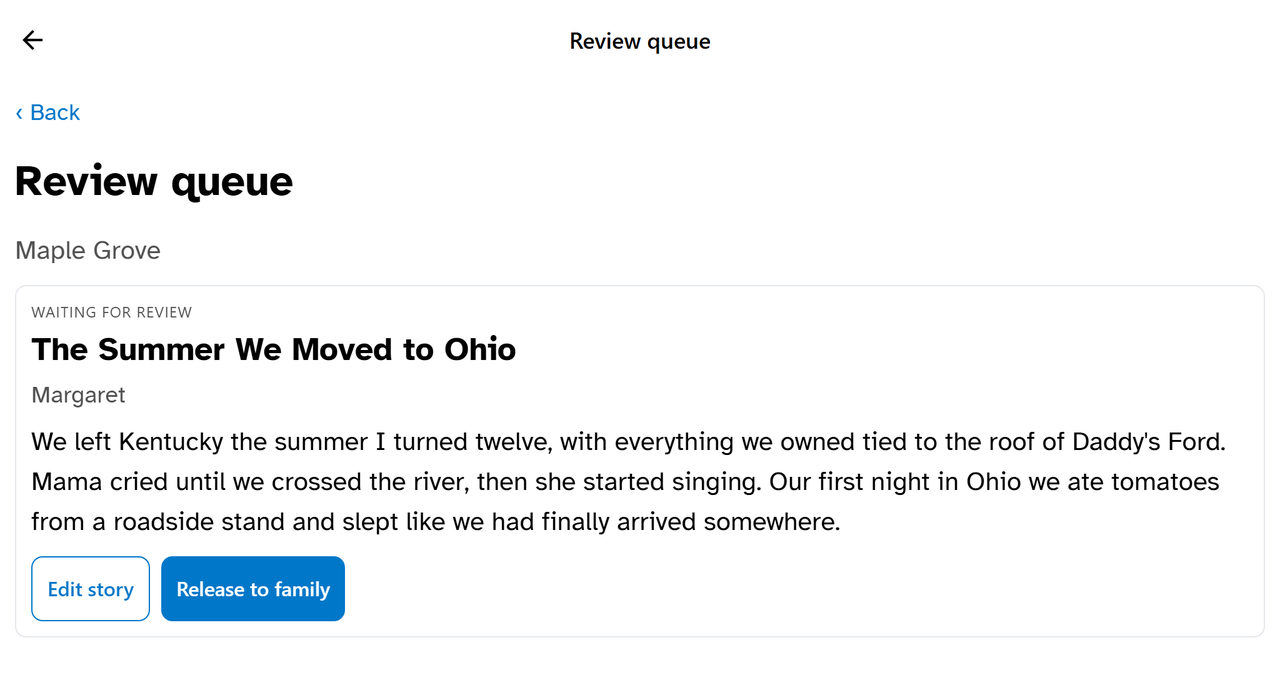
Their link opens Recall Aid on the tablet. Stories wait in the review queue.
Families get the story
The finished story, once the resident says yes.

One app runs the floor.
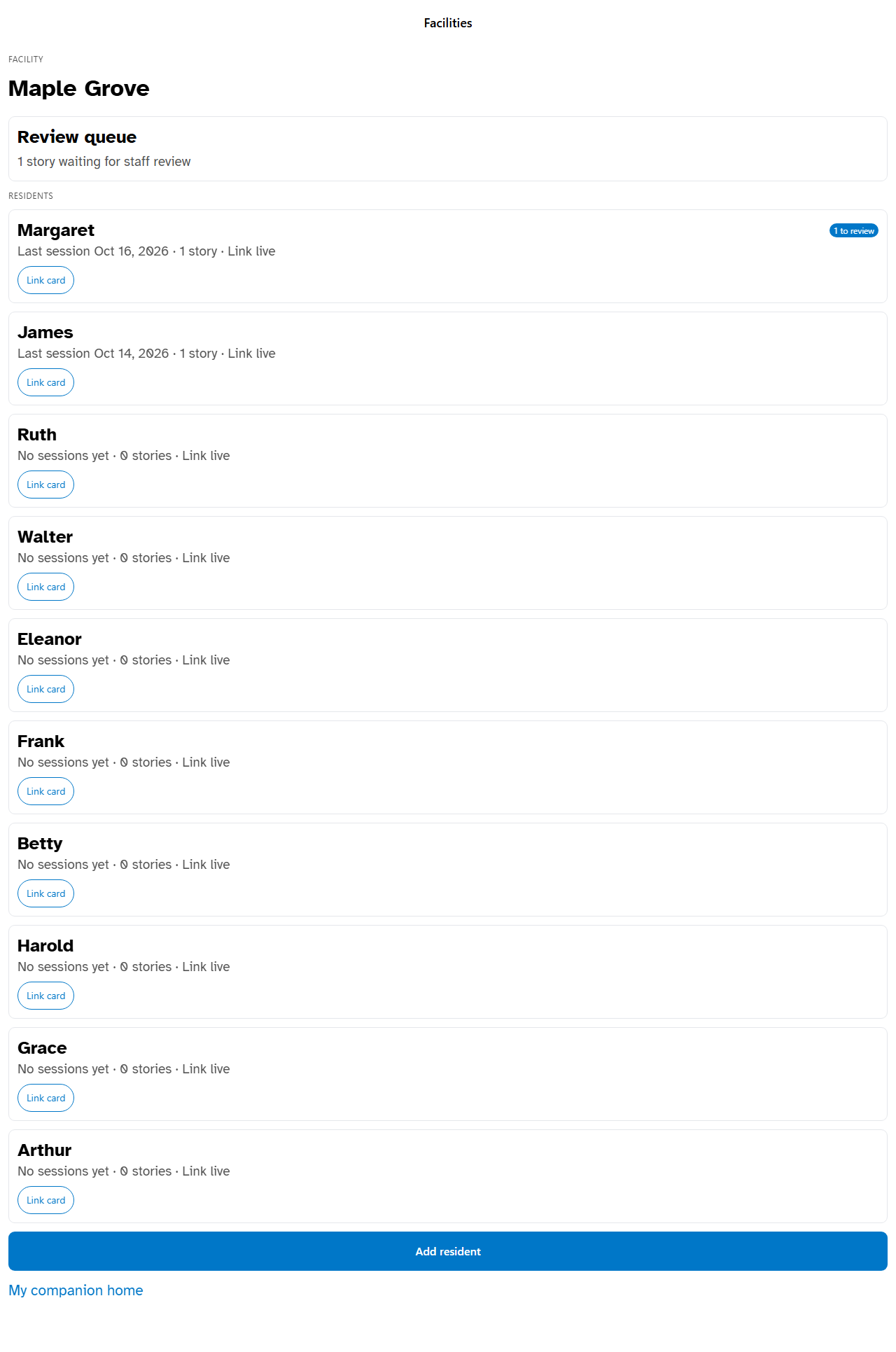

What a resident receives: their own book.
This is one family's book, an example book, kept here in full.
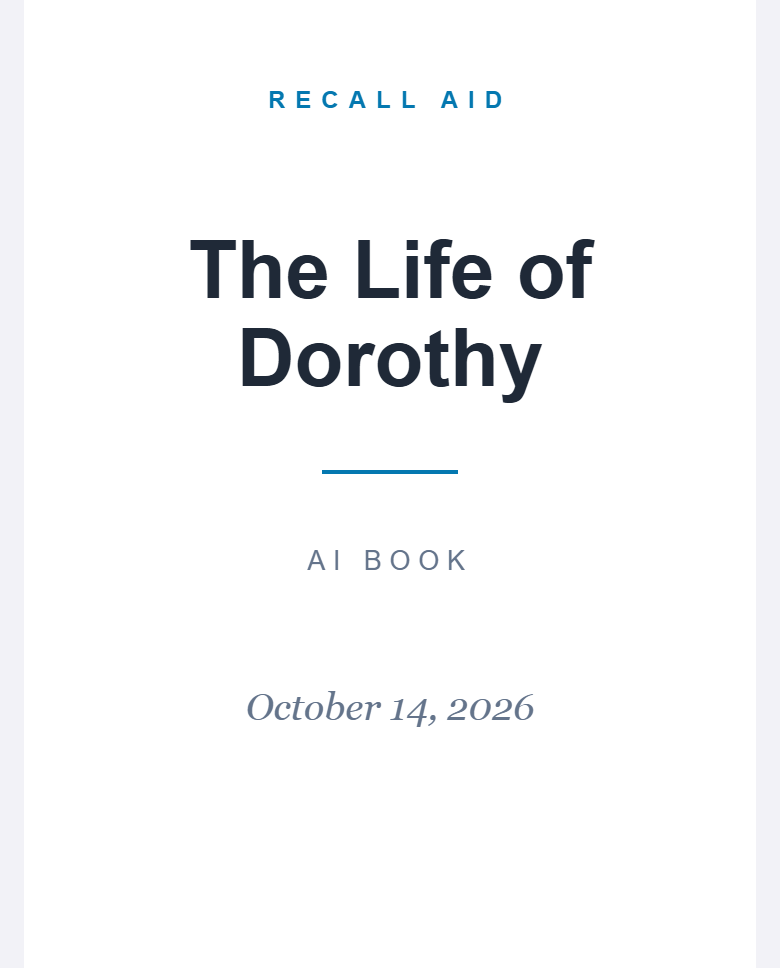
Shape the stories. Keep the people current.
Stories can be edited. People can be corrected or added.
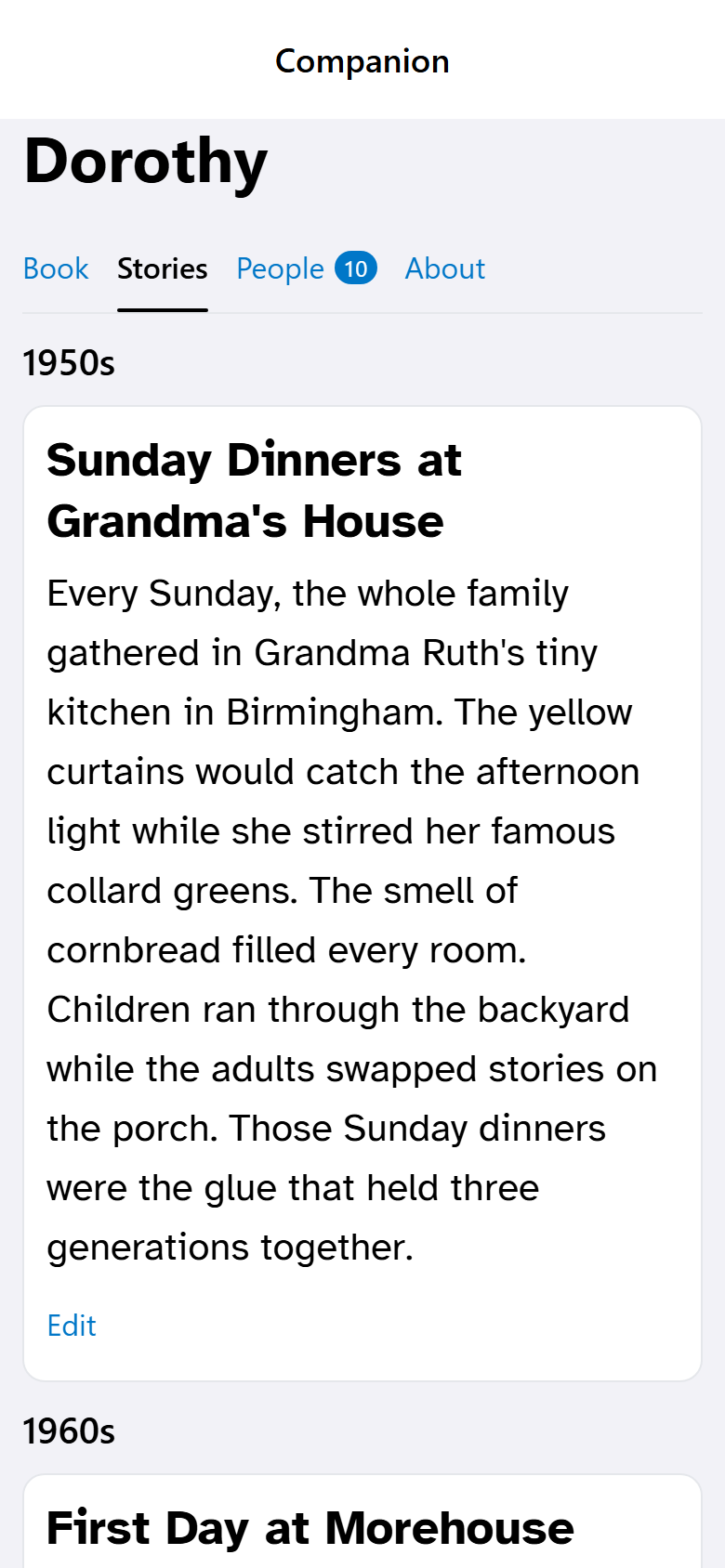

Reminiscence work, as it is done on a floor.
Asks, never leads
Follows the resident. Never quizzes.
Nothing invented
Only what the resident said.
Consent first
Agreed first, and again before sharing.
Not a diagnosis
No assessing, diagnosing, or treating.
Pricing for facilities
Priced per facility, by resident count. Pilots start small.
Questions administrators ask
Who consents, and what is recorded?
Residents consent first, and choose at the end whether to share; we keep the transcript and finished story. Privacy summary in writing before a pilot.
What does it need from our building?
Wi-Fi and a power outlet; we set up the kit in advance.
What happens if a resident says something concerning?
It does not counsel or intervene; staff keep their usual protocols. We show your team its limits first.
Is there research behind it?
Reminiscence work with older adults, and an IRB-approved memory study at Morehouse College. Measured, not estimated.